
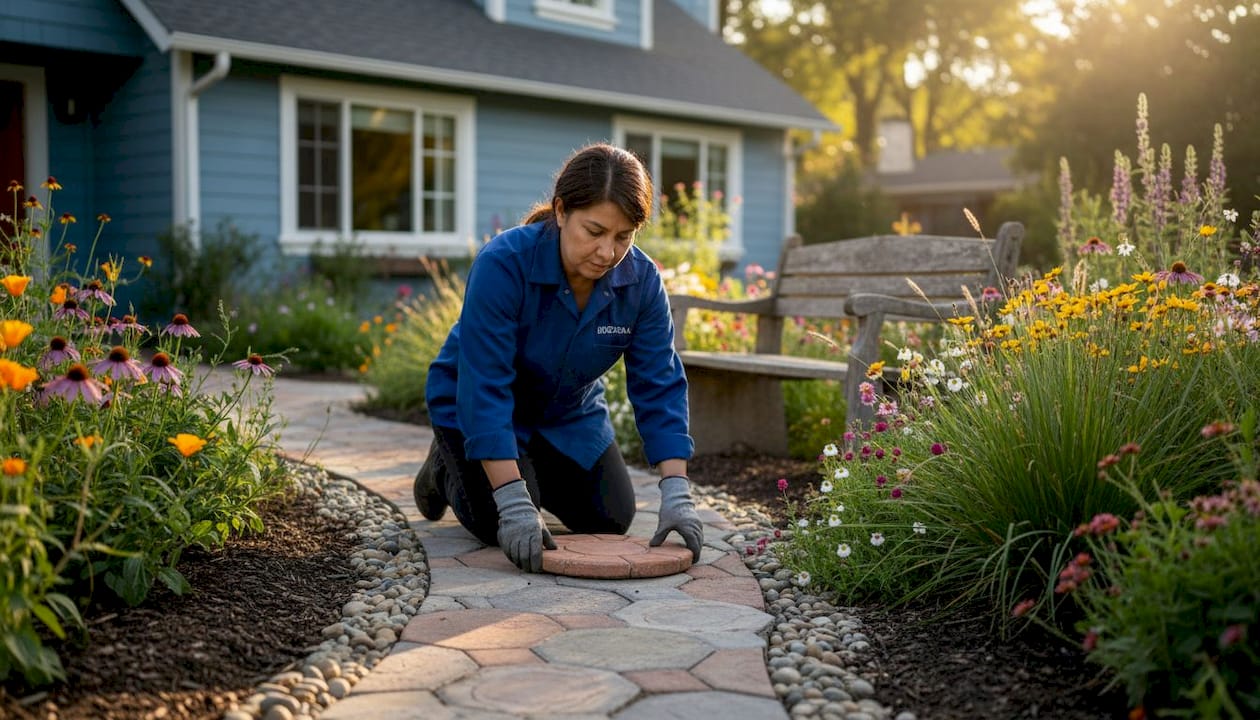
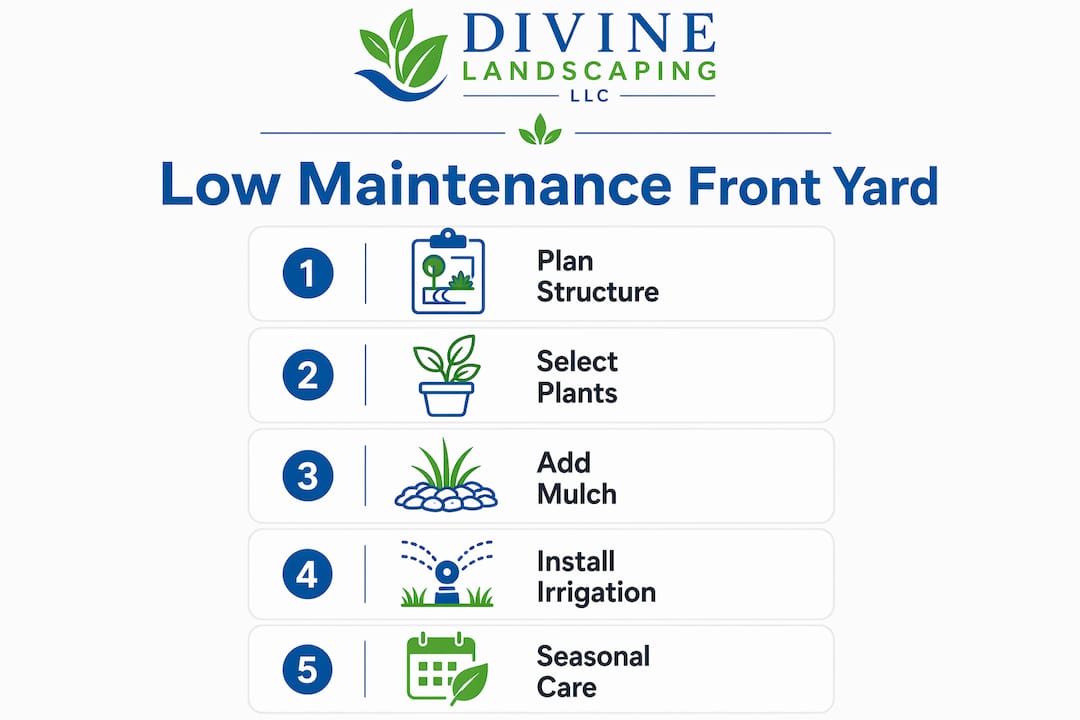
The most effective way to design a low maintenance front yard is to make the right decisions before you plant a single thing. Choose drought-tolerant or native plants, replace high-effort lawn areas with hardscape or ground covers, apply mulch consistently, and automate your watering. Done well, your yard stays attractive through every season with only a few hours of attention per month.
Here is a quick summary of the core strategies:
- Replace narrow lawn strips with larger planting beds or gravel
- Choose plants matched to your local climate and soil
- Apply a 2–4 inch mulch layer twice per year
- Install drip irrigation with a smart timer
- Use defined edging to keep beds tidy with minimal effort
- Group plants by water needs to simplify irrigation
- Anchor the design with evergreen shrubs for year-round structure
Low maintenance does not mean zero effort. It means the work is predictable, simple, and spread across the year rather than piling up every weekend.
Table of Contents
- ## 1. How hardscaping gives your front yard structure without the upkeep
- ## 2. Which plants make an easy-care front yard look great all year?
- ## 3. How mulch and ground covers cut your maintenance time in half
- ## 4. How automated irrigation saves you time and water every week
- ## 5. What landscape professionals say about designing for lasting curb appeal
- Divinelandscapingllc designs front yards that stay beautiful with less work
- Key Takeaways
## 1. How hardscaping gives your front yard structure without the upkeep
Hardscape is the skeleton of any low maintenance yard. When the bones are right, the yard looks intentional even when plants are still young or dormant in winter. The goal is to replace high-effort surfaces like turf with durable materials that hold their appearance without weekly attention.
Gravel, flagstone, permeable pavers, and natural stone are the workhorses here. Crushed granite and river rock reduce weeding and look finished from day one. Permeable pavers allow rainwater to drain naturally, which cuts down on runoff issues and keeps the surface stable. For edging, galvanized steel or stone borders prevent grass from creeping into beds and eliminate the need for constant trimming.
Pathway width is one detail most homeowners get wrong. Main paths should be 6–8 feet wide to allow two people to walk side by side and accommodate a wheelbarrow or stroller. Secondary paths work well at 4–5 feet. Wider paths also make it easier to maintain the beds on either side without stepping on plants.
Key hardscaping choices for a low maintenance front yard:
- Crushed gravel paths: Drain freely, deter weeds, and require no mowing
- Flagstone or permeable pavers: Replace turf in high-traffic zones with a surface that holds up for decades
- Metal or stone edging: Keeps mulch in place and stops grass encroachment with no ongoing trimming
- Gravel seating pads: A simple 4-by-6-foot gravel pad near the entry adds function without adding maintenance
- Retaining walls: Control erosion on slopes and create defined planting terraces that are far easier to manage than a sloped lawn
Pro Tip: Incorporate narrow lawn strips directly into wider planting beds. Mowing a thin strip of grass between beds takes more time than it looks, and eliminating it in favor of a larger bed with ground cover is one of the fastest ways to cut your weekly workload. You can explore hardscape services that cover everything from gravel installations to custom stone pathways.
## 2. Which plants make an easy-care front yard look great all year?
Plant selection is where most low maintenance yards succeed or fail. The right plants thrive with minimal input. The wrong ones demand constant watering, pruning, and replacement. The principle is simple: right plant, right place.
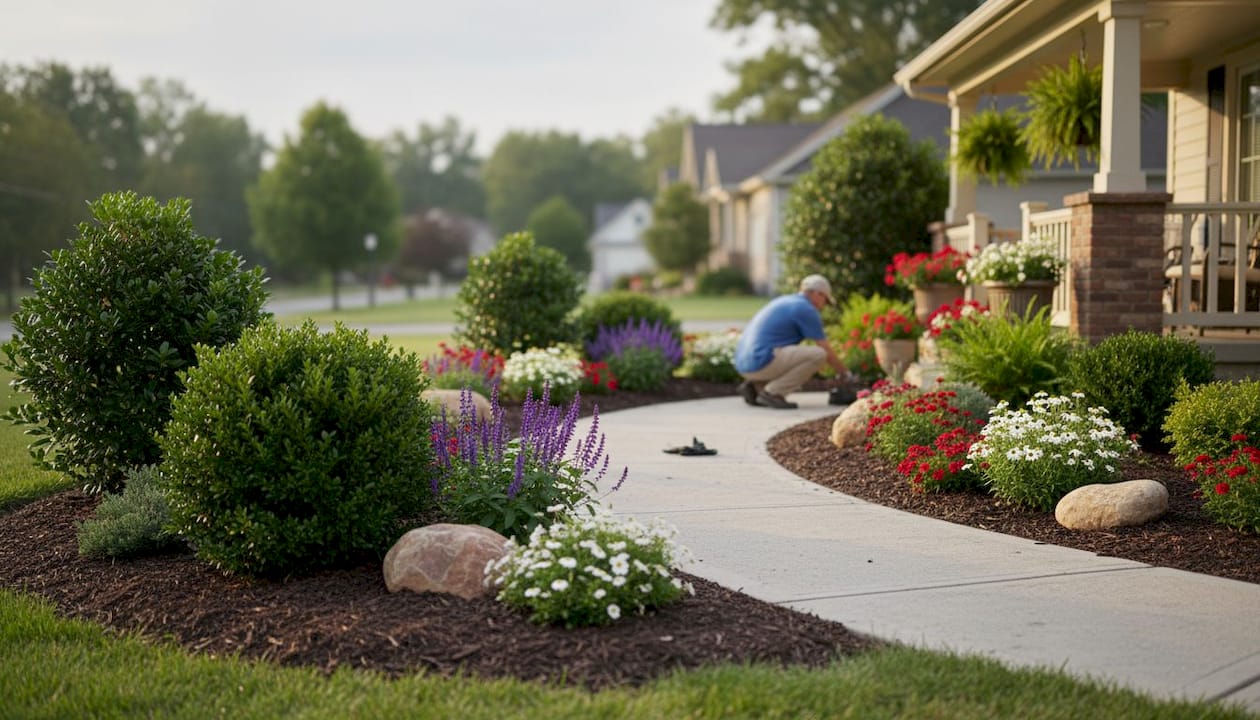
Evergreen shrubs provide year-round color and structure without seasonal replanting. Boxwood, yew, holly, and laurel hold their shape with one or two light trims per year. In colder climates like New Hampshire, at least half of your structural plants should remain visually interesting after the leaves drop. Bare sticks in January are a design failure, not a seasonal inevitability.
Mass planting is one of the most underused strategies in residential front yards. Large, bold beds filled with a single species or a tight mix of two or three plants look intentional from the street and require far less grooming than a fragmented collection of individual specimens. Grouping by water needs, called hydrozoning, makes irrigation efficient and prevents over-watering drought-tolerant plants alongside thirsty ones.
Plant recommendations by role:
- Evergreen anchors: Boxwood, dwarf yaupon holly, yew, inkberry holly (native)
- Drought-tolerant perennials: Catmint, coneflower, black-eyed Susan, yarrow, Russian sage
- Self-seeding perennials: Coreopsis, bachelor button, black-eyed Susan (fill beds naturally over time)
- Ground covers: Creeping thyme, sedum, Pennsylvania sedge, vinca minor
- Ornamental grasses: Blue fescue, Karl Foerster feather reed grass (hold color and structure all season)
Check your USDA Plant Hardiness Zone before buying anything. A plant that thrives in Zone 7 may not survive a New Hampshire Zone 5 winter, no matter how well you care for it.
Pro Tip: Choose plants for their mature size, not their current size at the nursery. A shrub that looks perfect at two feet will outgrow its spot in three years if it reaches six feet at maturity. Spacing for mature size now eliminates years of pruning later. For ideas on fitting plants into tighter spaces, small yard landscaping guidance covers layout strategies that keep things proportional.
## 3. How mulch and ground covers cut your maintenance time in half
Mulch is the single highest-return, lowest-effort tool in low maintenance landscaping. A 2–4 inch layer applied twice per year suppresses weeds, retains soil moisture, and moderates soil temperature through summer heat and winter cold. Keep mulch away from plant stems and trunks to prevent rot. That one detail separates effective mulching from mulch that damages your plants.
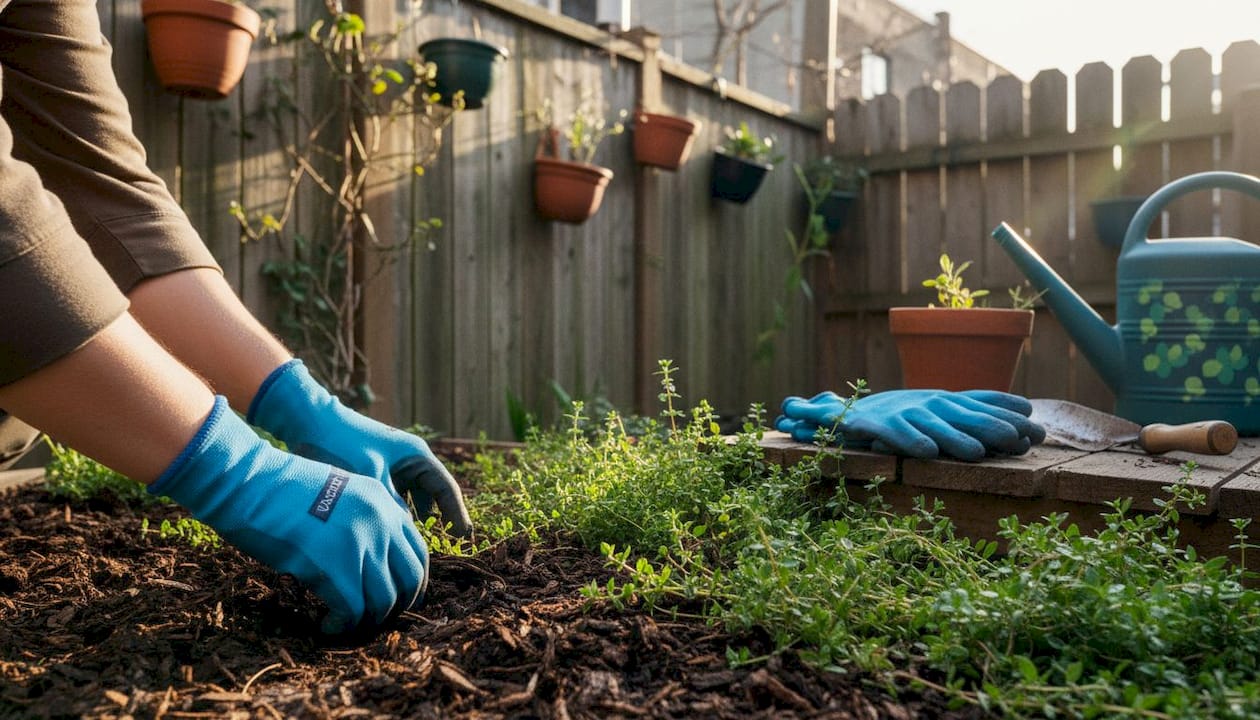
Ground covers function as living mulch. Once established, plants like creeping thyme, sedum, and vinca minor form a dense layer that blocks sunlight from reaching weed seeds. They also prevent soil erosion on slopes and reduce the bare-soil patches where weeds love to take hold. For shaded areas under trees, Pennsylvania sedge handles a wide range of light conditions and stays low without mowing.
| Mulch or Ground Cover | Best Use | Key Benefit |
|---|---|---|
| Bark chips | Planting beds, shrub borders | Suppresses weeds, improves soil as it breaks down |
| Crushed gravel | Paths, dry areas, around succulents | Long-lasting, no decomposition, excellent drainage |
| Compost | Top-dressing beds in spring | Feeds soil, improves structure, retains moisture |
| Creeping thyme | Sunny slopes, path edges | Living weed barrier, low-growing, drought-tolerant |
| Vinca minor | Shaded beds, under trees | Dense cover, suppresses weeds, evergreen in mild climates |
| Pennsylvania sedge | Shaded or partly shaded areas | Handles dry shade, stays low, no mowing needed |
For a front yard that looks polished year-round, pair organic mulch in planting beds with a gravel or stone border along the edges. The contrast defines the bed cleanly and keeps the mulch from migrating onto the lawn or path. You can find more low maintenance landscaping ideas that pair mulch strategies with smart ground cover choices.
## 4. How automated irrigation saves you time and water every week
Watering is the task that eats the most time in a front yard that was not designed with efficiency in mind. The fix is to stop hand-watering and let the system do the work. Drip irrigation paired with a smart timer delivers water directly to plant roots, reduces runoff, and cuts the time you spend standing outside with a hose to zero.
Smart irrigation controllers go further by adjusting watering schedules based on weather data. If it rained yesterday, the system skips today’s cycle automatically. Many newer controllers connect to your phone, so you can adjust schedules or check for leaks from anywhere. For a front yard with mixed plant types, set up separate irrigation zones by water need so lavender and hydrangeas are never on the same schedule.
Practical irrigation setup for a low maintenance yard:
- Drip lines for beds: Target roots directly, minimize evaporation, and keep foliage dry to reduce disease
- Smart timer or controller: Automates scheduling and adjusts for rainfall automatically
- Hydrozoning: Group plants with similar water needs on the same zone so nothing is over or under-watered
- Moisture sensors: Prevent watering when soil is already saturated, saving water and reducing root rot risk
- Annual emitter check: Inspect drip emitters each spring for clogs or damage before the growing season begins
Divinelandscapingllc offers irrigation services that include drip system design and smart controller installation, which takes the guesswork out of setup for homeowners who want it done right the first time.
## 5. What landscape professionals say about designing for lasting curb appeal
The front yards that hold up best over time share one trait: they were designed with structure first and flowers second. Professional designers consistently prioritize evergreen anchors, clear edges, and repeating plant groups before adding seasonal color. That approach keeps the yard looking intentional in January just as well as it does in June.
Soil preparation is where many homeowners skip a step that costs them later. Testing your soil through a resource like the Cornell Cooperative Extension soil testing program tells you exactly what amendments your beds need before you plant. Adding compost to a depth of 6–8 inches at the start improves drainage, feeds soil biology, and gives plants the foundation to establish quickly with less supplemental watering.
Seasonal maintenance for a low maintenance yard follows a simple rhythm. In spring, top-dress beds with compost and refresh mulch where it has thinned. In early summer, shear catmint after its first flush to encourage a second bloom. In fall, leave most perennial stems standing through winter for visual interest and wildlife habitat. Pruning timing matters too: spring bloomers get pruned right after flowering, while late-season bloomers are cut back in late winter before new growth starts.
Pro Tip: Design for your worst month, not your best. If August is when you are least available, that should be the yard’s easiest season. Choose plants that need no deadheading, no staking, and no supplemental watering once established, and schedule any heavier tasks like compost top-dressing for spring when you have more time.
For homeowners working through a full redesign, Divinelandscapingllc’s landscape design guidance for New Hampshire homeowners covers how to layer structure, plant selection, and hardscape into a cohesive plan that holds its curb appeal through all four seasons. Using native plants fitted to your local climate reduces watering needs and increases long-term plant success, making the yard easier to manage year after year.
Divinelandscapingllc designs front yards that stay beautiful with less work
Spending every weekend fighting your front yard is not the goal. A well-designed yard should look sharp with a few hours of attention per month, and that starts with getting the design right from the beginning.
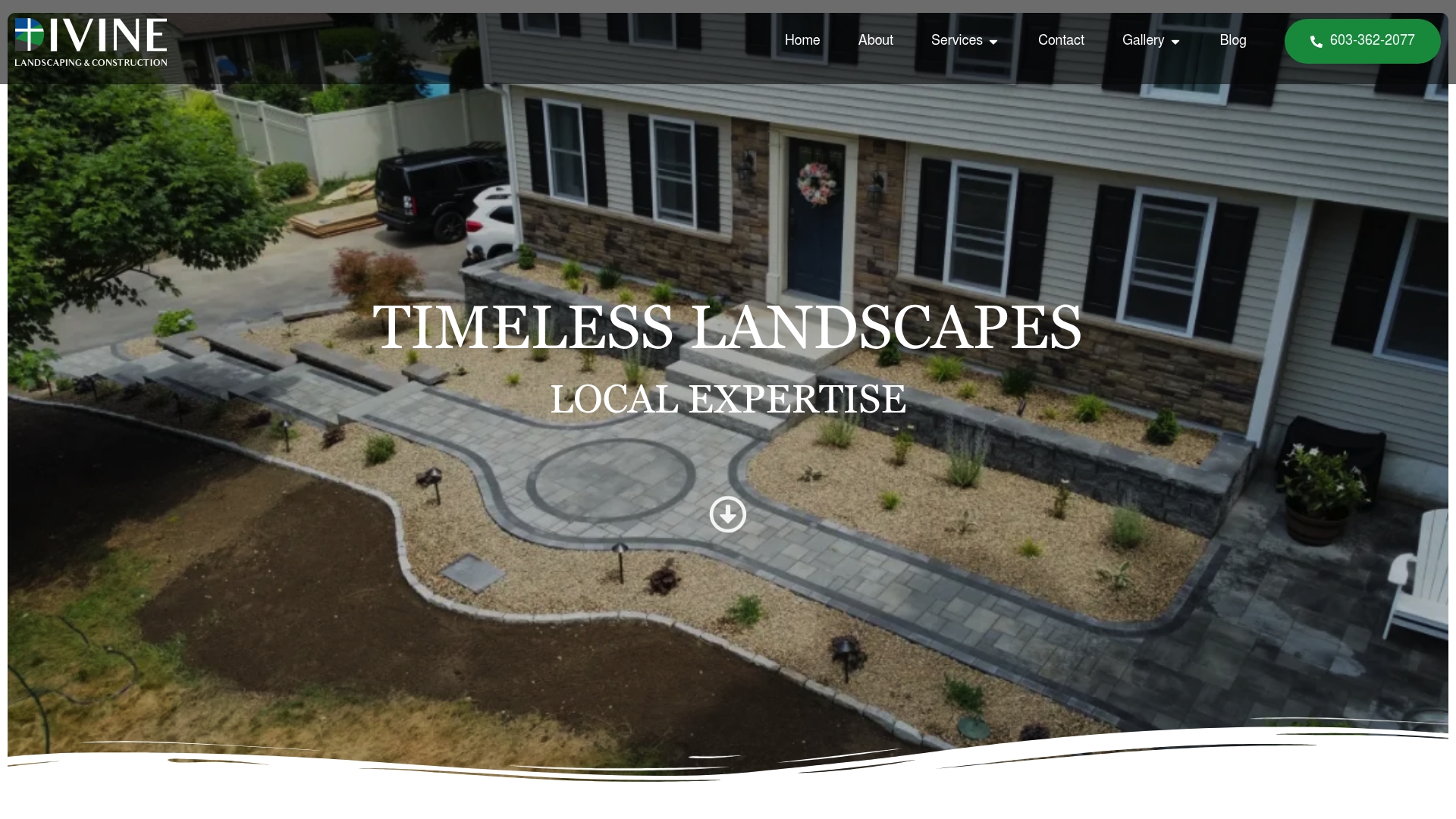
Divinelandscapingllc works with homeowners across New Hampshire to build custom landscape designs that combine drought-tolerant planting plans, durable hardscape, and efficient irrigation into a single cohesive system. The result is a front yard that improves your home’s curb appeal and holds its appearance through New England winters without demanding constant upkeep. Whether you need a full redesign, a new drip irrigation system, or a hardscape installation that replaces a high-maintenance lawn, the team at Divinelandscapingllc handles the planning and the build so you do not have to piece it together yourself. Visit divinelandscapingllc.com or request a quote to get a design plan tailored to your property.
Key Takeaways
A low maintenance front yard is built on upfront design decisions, not ongoing effort: the right plants, hardscape, mulch, and irrigation do the work so you do not have to.
| Point | Details |
|---|---|
| Start with hardscape | Gravel, permeable pavers, and defined edging reduce mowing, trimming, and weeding from day one. |
| Mulch twice per year | Apply a 2–4 inch layer of mulch twice per year to suppress weeds and retain moisture in every planting bed. |
| Choose plants for your zone | Native and drought-tolerant species matched to your USDA hardiness zone need less water and less pruning once established. |
| Automate your watering | Drip irrigation with a smart timer eliminates hand-watering and adjusts automatically for rainfall. |
| Divinelandscapingllc | Designs and builds complete low maintenance front yards in New Hampshire, from hardscape to irrigation to plant selection. |