
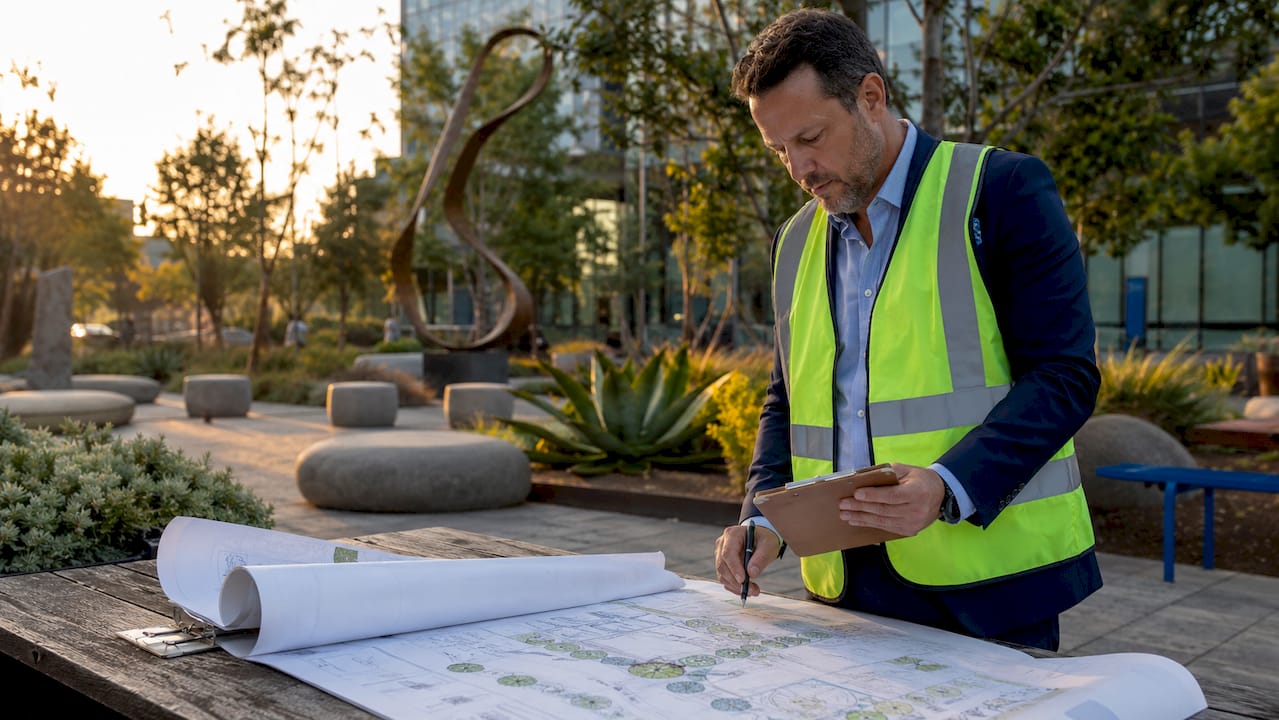
Employee outdoor space design is the intentional planning and structuring of outdoor workplace areas to serve specific functions like work, rest, collaboration, and events rather than leaving them as unused or decorative space. The industry term for this practice is biophilic workplace design, and it draws on landscape architecture, facilities management, and organizational psychology. Research confirms that well-designed outdoor spaces reduce stress, increase nature connectedness, and support productivity. Facility management professionals now treat these areas as strategic investments, not afterthoughts. For HR professionals and workplace designers, understanding what is employee outdoor space design is the first step toward building environments where people genuinely want to work.
What is employee outdoor space design and why does it matter?
Employee outdoor space design is the practice of converting underused exterior areas into purposeful, functional zones that extend the office environment outdoors. The goal is not to add greenery for visual appeal. The goal is to create spaces where employees can focus, collaborate, decompress, and connect with nature during the workday.
Outdoor spaces viewed as cultural infrastructure shape how people work, gather, and connect across an organization. That framing matters because it shifts the conversation from “nice to have” to “necessary for performance.” When outdoor areas are designed with the same intentionality as interior offices, they become active contributors to employee engagement and retention.

The link to well-being is backed by research. A 2026 study found that green-wall conditions were statistically superior to no-green-wall conditions for both subjective and EEG indicators of attention and relaxation. That means biophilic elements like vegetation and green walls are not decorative choices. They are functional tools that restore attention and reduce mental fatigue.
What are the key features and zones in effective outdoor space design?
Effective outdoor space design uses a multi-zone model that matches physical areas to specific employee behaviors. A single open lawn serves no one well. A thoughtfully zoned campus serves everyone.
The Gilead Park project is the clearest real-world example of this approach. Its five-zone design includes a central gathering space, an event promenade, a recreation turf, woodland gardens, and an amphitheater. Each zone targets a different employee need, from casual socializing to structured presentations to quiet renewal.
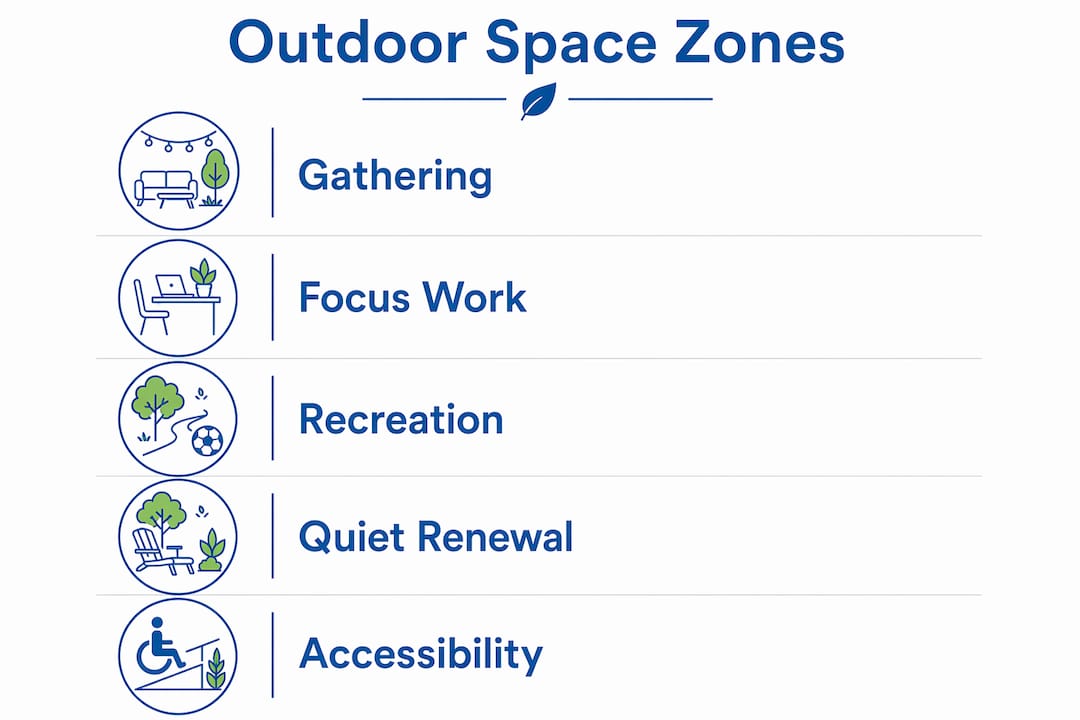
When planning your own zones, consider these core categories:
- Gathering and social zones: Seating clusters, shade structures, and tables that support informal conversation and team lunches.
- Focus and work zones: Wi-Fi access, power outlets, and acoustic privacy screens that allow heads-down work outdoors.
- Recreation zones: Open turf, walking paths, or fitness areas that encourage physical movement during breaks.
- Quiet renewal zones: Planted gardens, water features, or secluded seating for individual rest and mental recovery.
- Event and presentation zones: Flat, accessible surfaces with flexible seating for all-hands meetings, onboarding sessions, or training events.
| Zone Type | Primary Use | Key Design Feature |
|---|---|---|
| Gathering | Social connection | Shade canopies, cluster seating |
| Focus/Work | Productive outdoor work | Wi-Fi, power, acoustic screens |
| Recreation | Physical activity | Open turf, walking paths |
| Quiet Renewal | Stress recovery | Planted gardens, water features |
| Event/Presentation | Structured programs | Flat surface, flexible seating |
Usability and accessibility are non-negotiable in zone design. ADA-compliant pathways, inclusive furniture layouts, and clear sightlines protect both employees and the organization.
Pro Tip: Design for year-round use from the start. Covered pergolas, weather-resistant composite furniture, and windbreak plantings extend the usable season significantly, especially in New England climates.
How does outdoor space design improve well-being and productivity?
The psychological case for outdoor workspaces is strong and growing. Nature exposure activates attentional restoration, which is the brain’s ability to recover from directed focus fatigue. It also reduces cortisol and perceived stress, particularly in employees who start with high baseline stress levels.
The Pop Out intervention, a 12-week structured program tested with Danish companies, produced measurable results. The study found significant increases in outdoor work days (p<0.01) and improved connectedness to nature scores (p=0.019). Employees who participated worked outside more frequently and reported stronger feelings of connection to the natural environment. That behavioral shift is the real outcome. Designing a beautiful outdoor space means nothing if employees never use it.
The stress findings are equally important. The study found no significant change in overall stress across all participants. However, subgroup analysis showed that highly stressed employees experienced meaningful stress reductions. That result tells HR professionals something critical: the employees who need outdoor spaces most are the ones who benefit most. Designing for average outcomes misses the people with the greatest need.
“Measurable benefits depend on making nature exposure reachable and engaging repeatedly, not just visually accessible, to activate restorative and stress reduction functions.”
Three behavioral mechanisms drive these outcomes:
- Attentional restoration: Time in natural settings replenishes directed attention capacity, improving focus after outdoor breaks.
- Stress buffering: Green environments lower perceived stress, particularly for employees with demanding roles.
- Social connection: Shared outdoor spaces create informal interaction opportunities that strengthen team cohesion.
Pro Tip: When measuring impact, segment your evaluation by baseline stress levels. Employees with high stress at the start will show the clearest benefits. Tracking this subgroup separately gives you the most useful data for program refinement.
What practical considerations ensure accessibility, safety, and year-round usability?
Physical design quality determines whether outdoor spaces get used or get ignored. Workplace design guidance calls for universal accessibility features, appropriate lighting, safety protocols, and maintenance programs as baseline requirements, not optional upgrades.
Here is a practical checklist for planning accessible, safe, and functional outdoor spaces:
- ADA-compliant pathways: Paved, level surfaces with curb cuts connecting all zones to building entry points.
- Inclusive seating: Mix of bench heights, armrests, and movable chairs to accommodate diverse physical needs.
- Lighting: Pathway and zone lighting for early morning and late afternoon use, particularly in fall and winter months.
- Structural safety: Pergolas, shade sails, and shelters must meet local building codes and account for wind and snow loads. Outdoor shelter design should be treated as safety-critical infrastructure requiring permits and risk management from the outset.
- Technology integration: Weatherproof power outlets, covered Wi-Fi access points, and cable management for outdoor work zones.
- Acoustic privacy: Planted hedges, wood screens, or fabric panels that reduce noise between zones.
Seasonal maintenance is the factor most often overlooked in the planning phase. Facility management experts emphasize structured landscape management and ongoing maintenance planning to keep outdoor areas inviting and usable year-round. A space that looks neglected in march or november signals to employees that the organization does not value it.
Pro Tip: Build your maintenance and operations plan before construction begins. Knowing who owns snow removal, furniture storage, and seasonal planting cycles prevents the most common reason outdoor spaces fall into disuse.
What strategies encourage employees to actually use outdoor workspaces?
Physical access alone does not drive adoption. Behavioral nudges combined with outdoor access maximize employee use. Simple facility access without guidance and programmatic support produces far weaker results.
The Pop Out program demonstrates what structured encouragement looks like in practice. It combined workshops, tutorials, and defined roles to help employees shift their work habits toward outdoor settings. The program did not just open a door and hope people walked through it. It actively coached employees on how and when to use outdoor spaces for real work tasks.
Your cultural integration strategy should include these elements:
- Leadership modeling: Managers who hold one-on-ones outdoors or take visible outdoor breaks signal that outdoor use is accepted and encouraged.
- Outdoor onboarding: New hire orientation sessions held in outdoor spaces build early familiarity and positive associations.
- Team-building events: Quarterly outdoor creative sessions or team lunches make outdoor spaces part of shared team identity.
- Formal break policies: An established policy on outdoor breaks combined with leadership promotion of outdoor use helps build consistent habits across the organization.
- Usage tracking: Door counters, booking systems, or periodic surveys give you data to refine programming and justify continued investment.
Linking outdoor space use to business goals is what separates programs that last from programs that fade. When HR connects outdoor space usage to retention metrics, engagement scores, and well-being survey results, the business case stays visible to leadership.
Pro Tip: Run a monthly outdoor creative sprint where teams brainstorm or review projects outside. It creates a recurring reason to use the space and builds a habit faster than open-ended encouragement alone.
Key Takeaways
Effective employee outdoor space design requires multi-zone planning, ADA-compliant infrastructure, biophilic elements, and structured programs to convert physical access into consistent employee use.
| Point | Details |
|---|---|
| Multi-zone design drives adoption | Plan distinct zones for work, socializing, recreation, and quiet renewal to serve all employee needs. |
| Biophilic elements restore attention | Green walls and vegetation improve EEG and subjective attention scores, making them functional, not decorative. |
| High-stress employees benefit most | Subgroup analysis shows the greatest stress reductions in employees with high baseline stress levels. |
| Operations planning prevents failure | Build maintenance and seasonal upkeep plans before construction to keep spaces usable year-round. |
| Programs convert access into habit | Structured interventions like the Pop Out model increase outdoor work days and nature connectedness significantly. |
Why outdoor spaces fail without an operations plan
Most outdoor workspace projects I have seen struggle for the same reason: the design phase gets all the attention and the operations phase gets none. A beautifully designed space with pergolas, planted gardens, and weatherproof furniture will sit empty by its second winter if no one owns the maintenance calendar.
The research backs this up. The Pop Out intervention worked not because the outdoor space was beautiful, but because it came with a structured program that coached employees on how to use it. Physical design is the foundation. Programming and operations are what make it function.
The other mistake I see regularly is designing for average employees rather than for the people who need outdoor spaces most. Highly stressed employees show the largest benefits from outdoor exposure, but they are also the least likely to self-initiate outdoor breaks without encouragement. Your design and your programs need to reach them specifically.
HR and facilities teams need to co-own this from day one. HR brings the behavioral and cultural strategy. Facilities brings the operational and structural expertise. When those two functions work in isolation, you get either a beautiful space no one uses or a functional space no one knows about. The landscape design process works best when organizational goals and physical design are planned together from the start.
Outdoor spaces succeed when they are treated as cultural infrastructure with the same operational rigor as any interior office environment. That mindset shift is the single most important thing HR professionals and workplace designers can bring to this work.
— Damian
How Divinelandscapingllc can build your outdoor workspace
Divinelandscapingllc designs and builds custom commercial outdoor spaces across New Hampshire and Massachusetts, with services that cover every element of a functional employee outdoor environment.
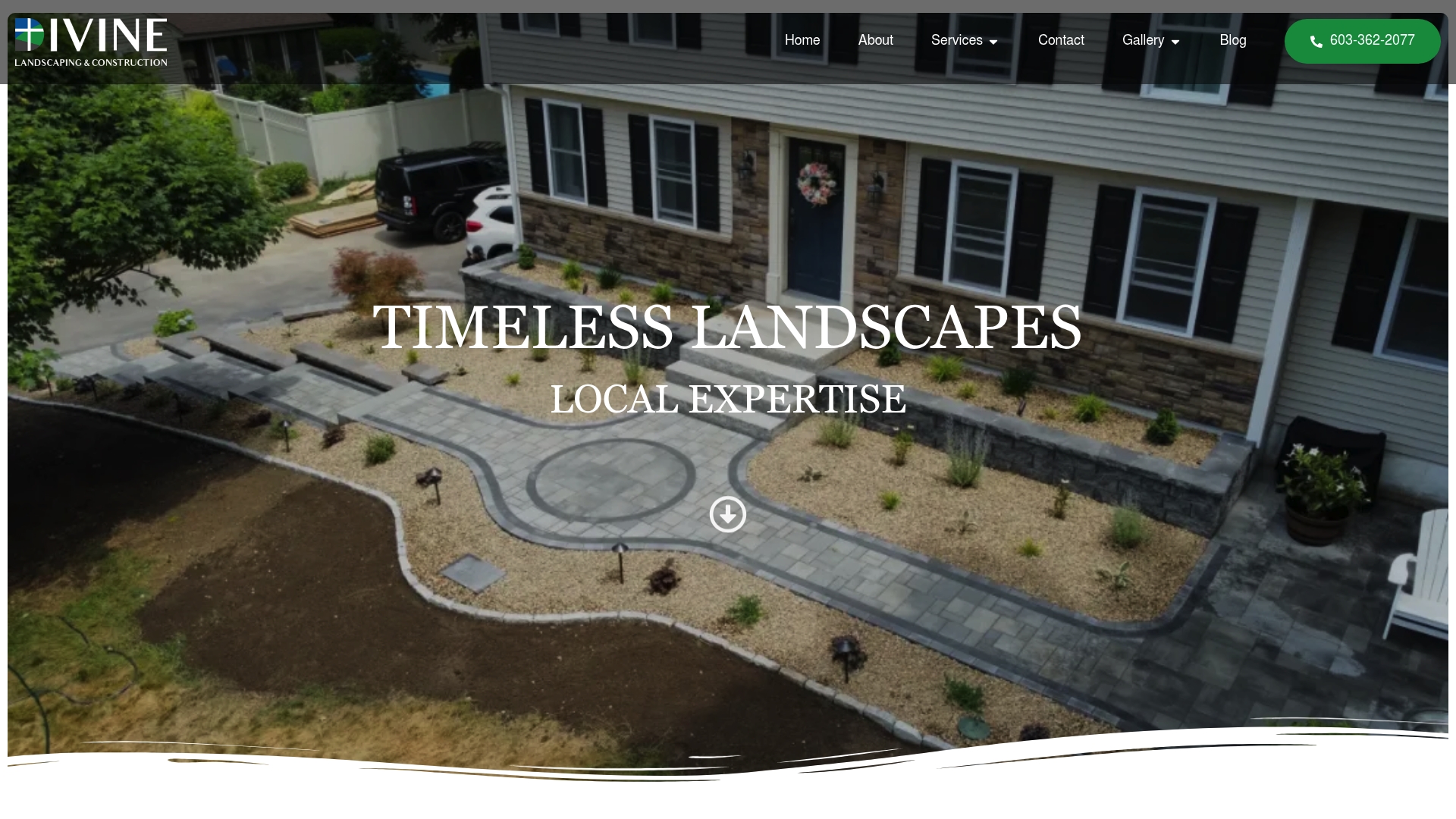
From ADA-compliant pathways and hardscape seating areas to planted gardens, pergolas, irrigation, and outdoor lighting, Divinelandscapingllc delivers the physical infrastructure that makes multi-zone outdoor workspaces possible. Their team works with commercial clients to plan spaces that function year-round, meet local building codes, and align with organizational goals for employee engagement and well-being. You can browse completed projects in the outdoor project gallery or connect directly with their team to discuss your site. Visit Divinelandscapingllc to request a consultation and get a custom quote for your corporate outdoor space.
FAQ
What is employee outdoor space design?
Employee outdoor space design is the intentional planning of exterior workplace areas into functional zones for work, rest, collaboration, and events. It treats outdoor areas as active extensions of the office rather than unused or purely decorative space.
What are the main zones in an effective outdoor workspace?
Effective outdoor workspaces include gathering zones, focus and work zones, recreation areas, quiet renewal spaces, and event or presentation areas. The Gilead Park model uses five distinct zones to serve the full range of employee needs.
How does outdoor space design improve employee well-being?
The Pop Out intervention showed significant increases in outdoor work days and nature connectedness, with the largest stress reductions in highly stressed employees. Biophilic elements like green walls also improve attention and relaxation based on EEG and subjective measures.
What makes an outdoor workspace ADA-compliant?
ADA compliance requires level, paved pathways connecting all zones to building entries, inclusive seating options at varied heights, and clear sightlines throughout the space. Lighting and accessible entry points are also required baseline features.
How do you encourage employees to use outdoor workspaces?
Structured programs, leadership modeling, formal outdoor break policies, and recurring outdoor team events drive consistent use. Research shows that behavioral nudges combined with physical access produce far stronger adoption than open access alone.