
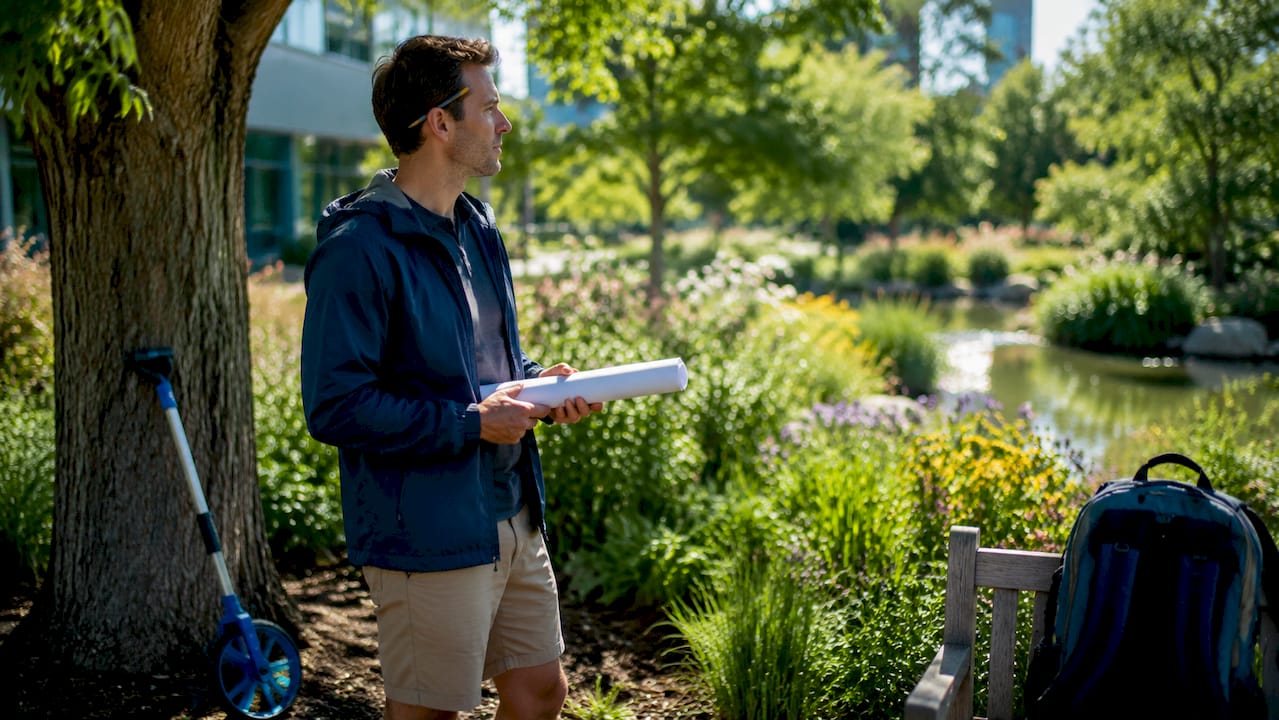
A commercial landscape renovation project is the process of systematically transforming your property’s outdoor space to improve aesthetics, functionality, and long-term value. Done right, a professionally executed renovation can increase property value by up to 15%. That return makes strategic planning not just worthwhile but financially necessary. For New Hampshire commercial property managers and business owners, the stakes are especially real: harsh winters, freeze-thaw cycles, and rocky soil create site-specific challenges that generic outdoor project planning simply cannot address.
How to plan a commercial landscape renovation project
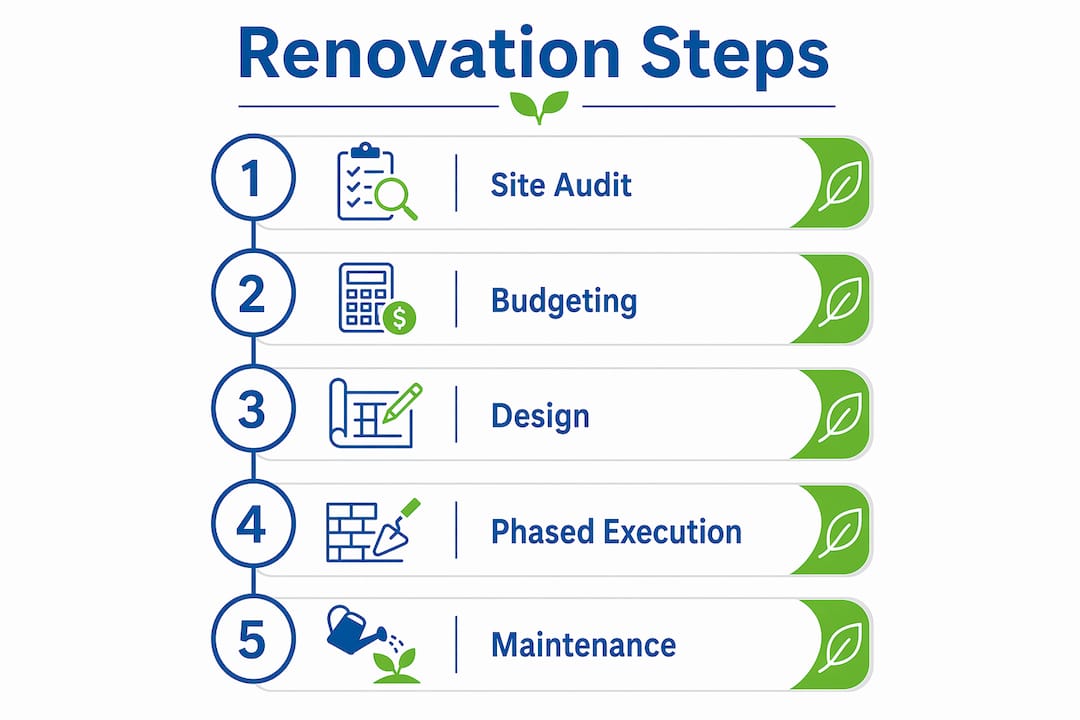
Before any contractor sets foot on your property, you need a clear picture of what you are working with. A professional site audit covers grading, drainage patterns, utility locations, soil conditions, and existing plant health. Skipping this step is the single most common reason commercial landscape renovations run over budget.
Your site evaluation should document:
- Grading and drainage: Identify low spots, runoff paths, and areas prone to standing water.
- Utility locations: Gas, water, electrical, and irrigation lines must be mapped before any excavation begins. Utility mapping before demolition prevents costly infrastructure damage.
- Existing hardscape condition: Assess walkways, curbing, retaining walls, and parking lot edges for structural integrity.
- Plant inventory: Note which trees, shrubs, and turf areas are worth preserving versus replacing.
Once the site audit is complete, set your budget with a realistic contingency built in. A 10–15% contingency fund is the industry standard for managing unforeseen conditions discovered during excavation, such as poor soil, buried debris, or underground obstructions. That buffer is not optional padding. It is your protection against a project that stalls mid-construction.
Pro Tip: Request itemized quotes from contractors, not lump-sum figures. Itemized cost breakdowns are critical for board approvals and give you a clear line of sight into where your budget is going.

| Planning Element | Why It Matters |
|---|---|
| Site audit | Identifies drainage, grading, and utility issues before work begins |
| Itemized contractor quote | Supports board approval and financial transparency |
| Permit documentation | Required for hardscape, grading, and irrigation work in NH |
| 10–15% contingency fund | Covers hidden site conditions discovered during excavation |
How does a phased renovation plan reduce cost and disruption?
Phased construction is the practice of dividing a renovation into sequential stages, completing the highest-priority areas first and deferring less critical work to future budget cycles. For commercial properties in New Hampshire, this approach is often the most practical path forward.
Here is how to structure a phased landscape renovation plan:
- Identify your high-visibility zones first. Entrances, parking lot perimeters, and building facades create the first impression for tenants, customers, and visitors. Completing these areas in Phase 1 delivers immediate curb appeal returns while the rest of the property remains operational.
- Defer lower-traffic areas to Phase 2. Side yards, rear service areas, and secondary walkways can be addressed in a later budget cycle without affecting daily business operations.
- Evaluate Phase 1 results before committing to Phase 2. Early phases give you real data on contractor performance, material durability, and actual versus estimated costs. Use that information to refine your Phase 2 scope and budget.
- Spread capital expenditures across fiscal years. Phased construction allows you to align major spending with your annual CapEx budget rather than absorbing the full project cost in a single cycle.
- Coordinate tenant and staff communication at each phase transition. Give occupants advance notice of construction zones, temporary access changes, and expected completion timelines.
A practical example: a 40,000-square-foot office park in southern New Hampshire might complete entrance planting beds, new walkways, and parking lot islands in Year 1, then address a rear courtyard seating area and irrigation upgrade in Year 2. The property looks improved immediately, and the total project cost is distributed without straining the annual operating budget.
Pro Tip: Businesses should plan a landscape refresh every 3–5 years to maintain a professional appearance and avoid the higher cost of a full redesign.
Which design elements maximize aesthetics and reduce maintenance costs?
The most expensive mistake in commercial landscape design is choosing features that look impressive at installation but create high ongoing maintenance costs. Maintenance efficiency must be integrated into the initial design, not added as an afterthought.
Hardscaping: durability first
Hardscape elements including walkways, patios, retaining walls, and curbing form the structural backbone of your outdoor space. Contractors install hardscape before softscape to avoid damaging newly planted material during heavy equipment work. This sequence is critical and often overlooked by property managers coordinating multiple subcontractors. For NH properties, concrete pavers and natural stone perform better than poured concrete in freeze-thaw conditions because individual units can shift and be reset without full replacement.
Planting and irrigation: choose for your climate
Native and drought-tolerant plants reduce irrigation demand and require less seasonal maintenance than non-native ornamentals. In New Hampshire, species like native ornamental grasses, inkberry holly, and serviceberry perform well across commercial settings with minimal intervention. Pair plant selection with a properly zoned irrigation system to avoid overwatering, which is a leading cause of turf disease and plant loss in commercial properties.
Water management: the most underestimated factor
Proper grading and drainage are non-negotiable. Poor water management causes foundation damage, erosion, and pavement failure, all of which cost far more to repair than to prevent. Your design should direct surface runoff away from building foundations and toward designated drainage areas or bioswales.
| Design Feature | High Maintenance Option | Lower Maintenance Option |
|---|---|---|
| Ground cover | Annual flower beds | Native perennial plantings |
| Walkway material | Poured concrete | Concrete or natural stone pavers |
| Turf areas | Full Kentucky bluegrass lawn | Reduced turf with mulched planting beds |
| Irrigation | Manual hose zones | Smart controller with rain sensors |
Lighting is the final layer. Well-placed LED path lighting and uplighting on specimen trees extend the usable hours of your outdoor space and improve safety for evening visitors. LED fixtures carry lower operating costs and longer replacement cycles than traditional landscape lighting.
What are the most common execution challenges in commercial landscape projects?
Even a well-designed landscape renovation plan can run into trouble during construction. Knowing the most common obstacles in advance lets you build solutions into your project management approach before problems arise.
- Unforeseen site conditions: Rocky ledge, poor soil, and buried debris are common in New Hampshire. Your 10–15% contingency fund exists specifically for these discoveries. Do not treat it as a cost savings target.
- Sequencing errors between hardscape and softscape: Hardscape installation must precede softscape to prevent equipment damage to new plantings. Confirm this sequence is written into your contractor’s work plan.
- Utility conflicts: Even with pre-construction mapping, field conditions sometimes differ from records. Require your contractor to hand-dig near known utility corridors rather than using mechanical equipment.
- Contractor scheduling gaps: Commercial projects often involve multiple trades, including grading contractors, hardscape installers, irrigation specialists, and planting crews. Gaps between trades extend timelines and increase disruption. Assign one point of contact to coordinate scheduling across all subcontractors.
- Business disruption: Minimize impact on tenants and customers by scheduling noisy or dusty work during off-peak hours and maintaining clear pedestrian access at all times.
“Integrating landscape planning with building projects reduces overall costs and maximizes efficiency. The earlier you bring a landscape contractor into the planning process, the more options you have.”
Detailed 2D CAD drawings or 3D design renderings improve stakeholder alignment before construction begins. Multiple revision rounds during the design phase cost far less than change orders during construction. Require your contractor to provide visual documentation before approving any scope of work.
Key takeaways
A successful commercial landscape renovation requires phased planning, realistic budgeting with contingency funds, and design decisions that account for long-term maintenance from the start.
| Point | Details |
|---|---|
| Start with a site audit | Assess grading, drainage, utilities, and existing conditions before setting any budget. |
| Budget a 10–15% contingency | Reserve funds for hidden site conditions discovered only after excavation begins. |
| Phase the work strategically | Complete high-visibility areas first to deliver immediate returns while managing costs. |
| Design for maintenance efficiency | Choose native plants, durable hardscape, and smart irrigation to reduce long-term operating costs. |
| Sequence hardscape before softscape | Install walkways, walls, and curbing before planting to prevent equipment damage to new material. |
What i have learned planning commercial landscape projects in NH
After working on commercial landscape renovations across New Hampshire, the pattern I see most often is this: property managers underestimate how much the planning phase determines the outcome. The design meeting feels like the exciting part. The site audit feels like a formality. That thinking is backwards.
The properties that end up with the best results are the ones where the property manager pushed hard for a thorough site evaluation, asked for itemized quotes, and insisted on a phased plan tied to their actual budget cycles. The ones that struggle are usually the ones that approved a lump-sum proposal based on a quick site walk and a rendering.
I also want to be direct about water management. In New Hampshire, grading and drainage are not secondary concerns. They are the foundation of every other decision you make. I have seen beautifully designed commercial properties develop serious foundation and pavement problems within three years because drainage was treated as an afterthought. Fix the grade first. Everything else builds on that.
One more thing: do not wait until your property looks neglected to act. A 3–5 year refresh cycle keeps your renovation costs manageable and your property competitive. A full redesign costs significantly more than a well-timed refresh. The best time to plan your next phase is while the current one still looks good.
— Damian
Start your NH commercial landscape renovation with Divinelandscapingllc
Divinelandscapingllc works with commercial property managers and business owners across New Hampshire to plan and build outdoor spaces that hold up to the demands of the region. From initial site audits and phased renovation planning to hardscape installation, irrigation, and planting, the team handles every stage of your project under one roof.
Whether you are refreshing an office park entrance or redesigning a full commercial property, Divinelandscapingllc delivers detailed landscape design and transparent, itemized proposals that make budget approval straightforward. Ready to move forward? Request a quote and get a consultation tailored to your property’s specific site conditions and goals.
FAQ
What is a commercial landscape renovation?
A commercial landscape renovation is the planned process of updating or redesigning a business property’s outdoor space to improve appearance, functionality, drainage, and long-term value. It typically includes hardscaping, planting, irrigation, lighting, and grading work.
How much should i budget for a commercial landscape project?
Budget is determined by scope, site conditions, and materials, but always include a 10–15% contingency on top of your base estimate to cover unforeseen conditions discovered during excavation.
How often should a commercial property refresh its landscaping?
Commercial properties should plan a landscape refresh every 3–5 years to maintain a professional appearance and avoid the significantly higher cost of a full redesign.
What is phased construction in commercial landscaping?
Phased construction divides a renovation into sequential stages, completing high-visibility or high-priority areas first and deferring other work to future budget cycles. This approach reduces business disruption and spreads capital expenditures over time.
Why does hardscape get installed before planting?
Hardscape installation requires heavy equipment that would damage newly planted trees, shrubs, and turf. Installing walkways, retaining walls, and curbing first protects your softscape investment and prevents costly replanting.