
Landscape contractor licensing is defined as the set of state and local certifications, registrations, and permits a business must hold to legally offer landscaping services for pay. In New Hampshire, the process differs from most states because no general state license covers basic landscaping work like mowing, pruning, planting, or hardscape installation. The critical license you do need is the Commercial Pesticide Applicator License, issued by the NH Department of Agriculture, Markets and Food (DAMF), if your services include any chemical treatments. Local business registrations add another layer that catches many new operators off guard. This guide walks you through every requirement so you can operate legally and confidently.
What is landscape contractor licensing in New Hampshire?
Landscape contractor licensing in New Hampshire is not a single document. It is a combination of state-level certifications and local registrations that together define your legal authority to work. The state does not issue a blanket “landscaping contractor license,” which surprises many people entering the field.
The one firm state requirement is the Commercial Pesticide Applicator License from NH DAMF. This license applies the moment you apply any pesticide, herbicide, or fertilizer commercially. Without it, offering weed control or lawn treatment services is illegal, regardless of how long you have been in business.
For services that involve no chemical applications, such as mowing, mulching, planting, or building patios and retaining walls, New Hampshire does not require a state-issued trade license. That said, you still need proper business registration and local permits. Skipping those steps creates real legal exposure.
Pro Tip: Contact the NH Secretary of State’s office early to confirm your business entity registration. An LLC registration costs about $100 and protects your personal assets from business liability.
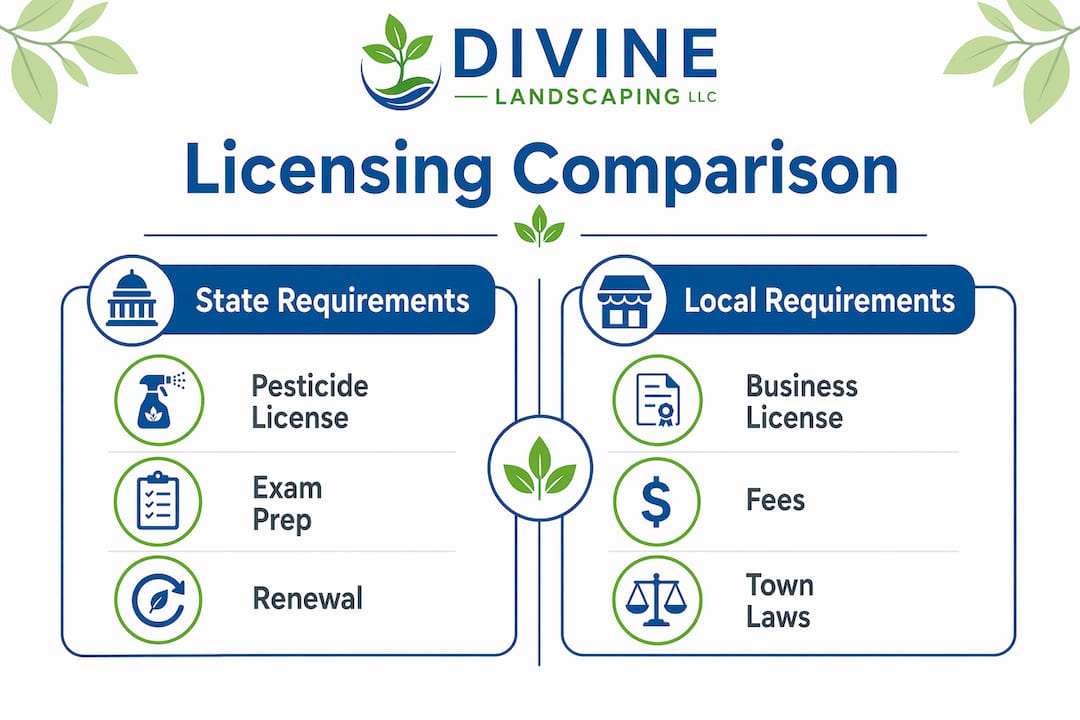
What are the state-level licensing requirements for landscape contractors?
The Commercial Pesticide Applicator License is the cornerstone of state-level compliance for any landscaper offering chemical services. Obtaining it requires passing two exams administered by NH DAMF: the Core exam and at least one Category exam.
The Category exams most relevant to landscaping are:
- G1 (Ornamental and Turf): Covers pesticide use on lawns, shrubs, and ornamental plants
- G2 (Right-of-Way): Covers vegetation management along roadsides and utility corridors
UNH Cooperative Extension offers $60 prep courses for these exams. These courses are not mandatory, but they significantly improve pass rates for first-time applicants. The exam content covers pesticide safety, label reading, application methods, and environmental protection.
Once you pass both exams, you apply to NH DAMF and pay a $60 license fee for a five-year term. The license requires proof of current liability insurance at renewal. If your license lapses, you must retake the exams before resuming any commercial pesticide application. That is a costly disruption to your business, so calendar your renewal date well in advance.
Basic landscaping without any chemical applications does not trigger this state license. A crew that only mows, plants, and installs pavers operates legally without a pesticide applicator license, as long as local registrations are in place.
Pro Tip: Keep a digital copy of your pesticide applicator license and insurance certificate in your work vehicle. Many municipal inspectors and commercial clients ask to see both on-site.
How do local business and contractor licensing requirements affect landscaping businesses?
Local licensing is where most new landscaping businesses in New Hampshire get tripped up. No statewide general business license exists, but many towns and cities require their own contractor or business licenses before you can legally operate within their boundaries.
These local requirements vary widely. Some towns require a simple annual registration. Others require a contractor-specific permit with proof of insurance. The fees also differ by jurisdiction, typically ranging from $25 to $200 per year. That range reflects how differently each municipality approaches business oversight.
The key facts about local licensing:
- City and town clerk offices manage all local business and contractor licenses
- Fees vary by jurisdiction, so check each town where you plan to work
- Non-compliance risks include fines, stop-work orders, and loss of contracts
- Some municipalities require proof of insurance before issuing a local license
- Annual renewal is standard for most local business registrations
NH’s regulatory framework favors local control, which means you cannot assume that one town’s rules apply to the next. A landscaping business operating in Windham, Derry, and Salem faces three separate sets of local requirements. Divinelandscapingllc, for example, maintains compliance across multiple New Hampshire municipalities to serve clients without interruption.
The safest approach is to call each town clerk’s office before you start any work in a new municipality. Ask specifically whether landscaping or contractor work requires a local license and what documentation you need to apply. This single phone call can save you from a stop-work order mid-project.
What practical regulations beyond licensing must landscapers follow in New Hampshire?
Licensing is only part of the compliance picture. Several other legal obligations apply to landscaping work in New Hampshire, and missing them carries serious consequences.
-
Call Dig Safe (811) before any excavation. RSA 374:47-56 requires notification at least 72 hours before any digging. This applies to planting trees, installing fence posts, setting irrigation lines, and any other ground disturbance. Failure to notify creates legal liability for any utility damage.
-
Carry general liability insurance. No state law mandates a specific coverage amount for basic landscaping, but a minimum of $1 million in general liability coverage is strongly recommended. Many commercial clients and municipalities require a certificate of insurance before awarding any contract.
-
Obtain workers’ compensation if you have employees. New Hampshire law requires workers’ compensation coverage for any business with employees. Sole proprietors without employees are exempt, but the moment you hire even one worker, coverage becomes mandatory.
-
Understand the general contractor license distinction. Many landscapers mistakenly believe they need a general contractor license for hardscape work. NH’s general contractor license applies to large construction projects and requires extensive experience and bonding. Basic hardscape installation, including patios, walkways, and retaining walls, does not trigger that requirement.
Pro Tip: Many commercial property managers require $1M–$2M in general liability coverage with your certificate of insurance listed as an additional insured. Confirm coverage limits before bidding commercial jobs.
How can you become compliant and obtain the necessary licenses in New Hampshire?
Getting fully licensed and registered in New Hampshire follows a clear sequence. Rushing any step creates gaps that can shut down your operation.
Follow these steps in order:
-
Register your business entity. File your LLC or corporation with the NH Secretary of State. Business registration costs about $100 and establishes your legal business identity before you apply for any license.
-
Prepare for the pesticide applicator exams. If your services include any chemical applications, enroll in a UNH Cooperative Extension prep course. Study the Core exam material plus your relevant Category exam (G1 for ornamental and turf work).
-
Pass the Core and Category exams. Schedule both through NH DAMF. Pass both before submitting your license application.
-
Apply for the Commercial Pesticide Applicator License. Submit your application to NH DAMF with the $60 fee and proof of liability insurance. Processing typically takes a few weeks.
-
Contact local town and city clerks. Identify every municipality where you plan to work. Request the specific local business or contractor license application for each. Submit applications with required fees and documentation.
-
Secure your insurance policies. Obtain general liability insurance at a minimum of $1 million. Add workers’ compensation if you have employees. Keep certificates current and accessible.
-
Set renewal reminders. Your pesticide applicator license renews every five years. Local business licenses typically renew annually. A lapsed license requires starting the exam process over.
The table below summarizes the key licensing costs and timelines you should plan for:
| Requirement | Cost | Renewal |
|---|---|---|
| NH LLC registration | ~$100 | Annual report required |
| Commercial Pesticide Applicator License | $60 | Every 5 years |
| UNH Cooperative Extension prep course | $60 per course | N/A |
| Local business license | $25–$200 | Typically annual |
| General liability insurance | Varies by coverage | Annual |
Timing matters. Plan for at least four to six weeks between starting the exam prep process and receiving your pesticide applicator license. Local license processing times vary by municipality, so apply early in the season.
Key Takeaways
Landscape contractor licensing in New Hampshire requires a Commercial Pesticide Applicator License for chemical services, local business registrations in each municipality you serve, and proper insurance coverage to operate legally and protect your business.
| Point | Details |
|---|---|
| No general state license | Basic landscaping without chemicals requires no NH state trade license. |
| Pesticide license is mandatory | Any chemical application requires a Commercial Pesticide Applicator License from NH DAMF. |
| Local licenses vary by town | Check with each city or town clerk; fees range from $25 to $200 annually. |
| Dig Safe is legally required | Call 811 at least 72 hours before any excavation under RSA 374:47-56. |
| Insurance protects your business | Carry at least $1 million in general liability coverage; workers’ comp is required if you have employees. |
Why I always tell landscapers to verify local rules before anything else
Most licensing guides lead with the state requirements and treat local rules as an afterthought. That is backwards. In my experience working with New Hampshire landscaping businesses, the local licensing gaps cause the most damage. A contractor can have a valid pesticide applicator license and still face a stop-work order because they skipped a $50 annual registration with the town clerk.
The pesticide licensure issue is equally underestimated. Landscapers who offer “lawn care packages” often include fertilizer or weed control without realizing those services legally require a Commercial Pesticide Applicator License. The fine for unlicensed pesticide application is not the only risk. The reputational damage from a client complaint to NH DAMF can end a business faster than any fine.
My honest advice: build your compliance checklist before you price your first job. Know exactly which towns you plan to serve, call their clerk offices, and confirm what they require. Then get your pesticide license if you plan to offer any chemical services. Do both of these things before you invest in equipment or marketing. The scope of work you define for your business directly determines which licenses you need. Get that clarity first, and the licensing process becomes straightforward rather than stressful.
— Damian
Divinelandscapingllc: licensed and ready to serve New Hampshire
Divinelandscapingllc operates as a fully compliant New Hampshire landscaping and hardscaping contractor, meeting all state and local licensing requirements across the communities it serves.
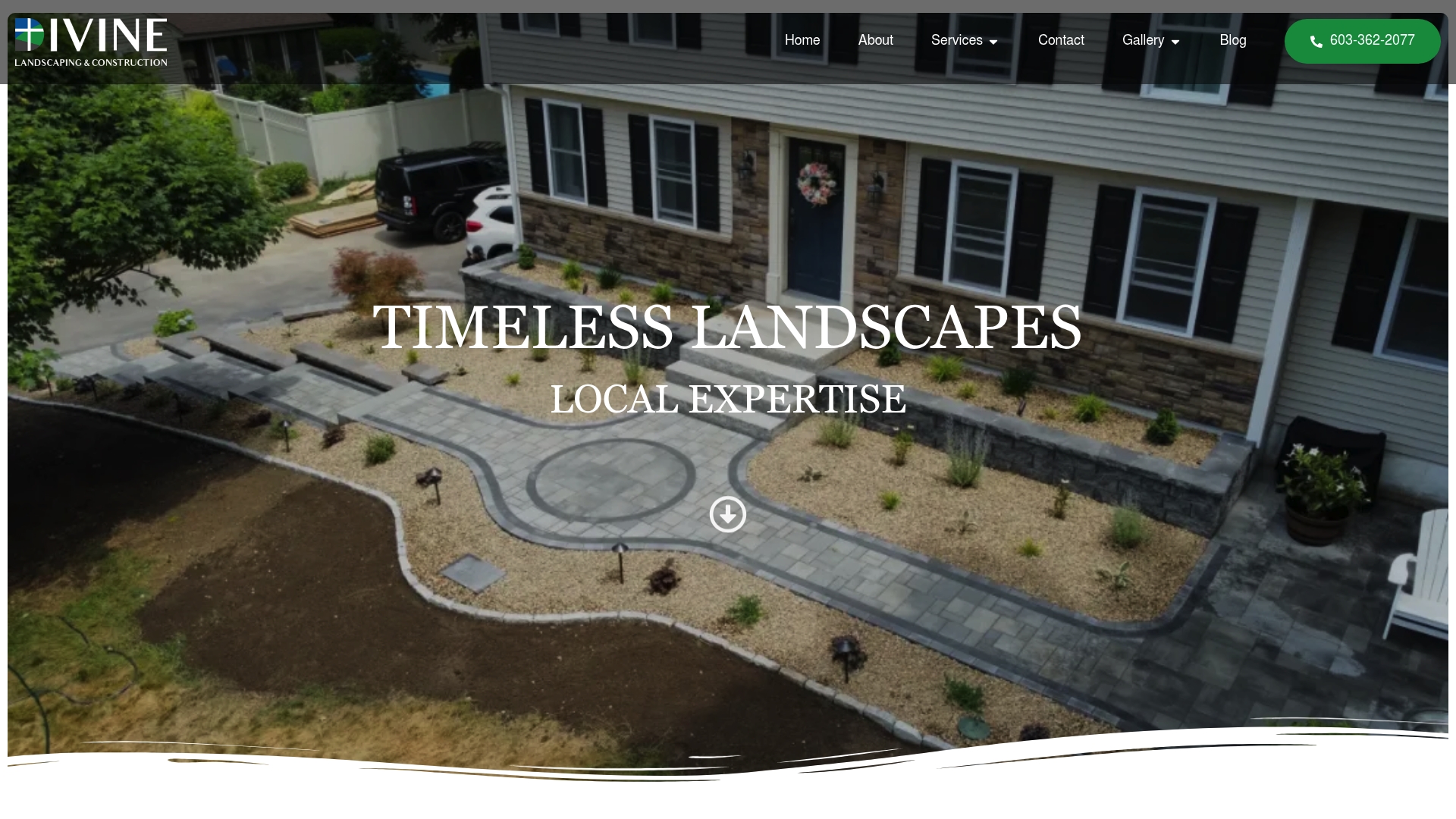
Whether you need custom landscape design for your residential property or a complete outdoor living build for a commercial site, Divinelandscapingllc carries the proper credentials, insurance, and local registrations to get the job done right. The team handles everything from patios and retaining walls to irrigation and lighting, with full compliance built into every project. Property managers can also explore the multi-tenant landscaping guide for guidance on managing landscaping across multiple units. Contact Divinelandscapingllc to discuss your project and get a clear plan from a team that knows New Hampshire’s requirements inside and out.
FAQ
Does New Hampshire require a general landscaping contractor license?
No. New Hampshire does not issue a general state-level landscaping contractor license for basic services like mowing, planting, or hardscape installation. Only chemical applications require a state license.
What license do I need to apply pesticides commercially in New Hampshire?
You need a Commercial Pesticide Applicator License from NH DAMF, which requires passing the Core exam and at least one Category exam, plus a $60 fee for a five-year term.
How do I find out if my town requires a local business license for landscaping?
Contact your city or town clerk’s office directly. Local business license fees in New Hampshire range from $25 to $200 annually, and requirements vary by municipality.
Do I need to call 811 before landscaping work that involves digging?
Yes. RSA 374:47-56 requires you to call Dig Safe at 811 at least 72 hours before any excavation, including minor digging for planting or irrigation line installation.
Does a landscaper in New Hampshire need a general contractor license for hardscape work?
No. Basic hardscape installation such as patios, walkways, and retaining walls does not require a general contractor license in New Hampshire. That license applies to large construction projects with extensive bonding requirements.