
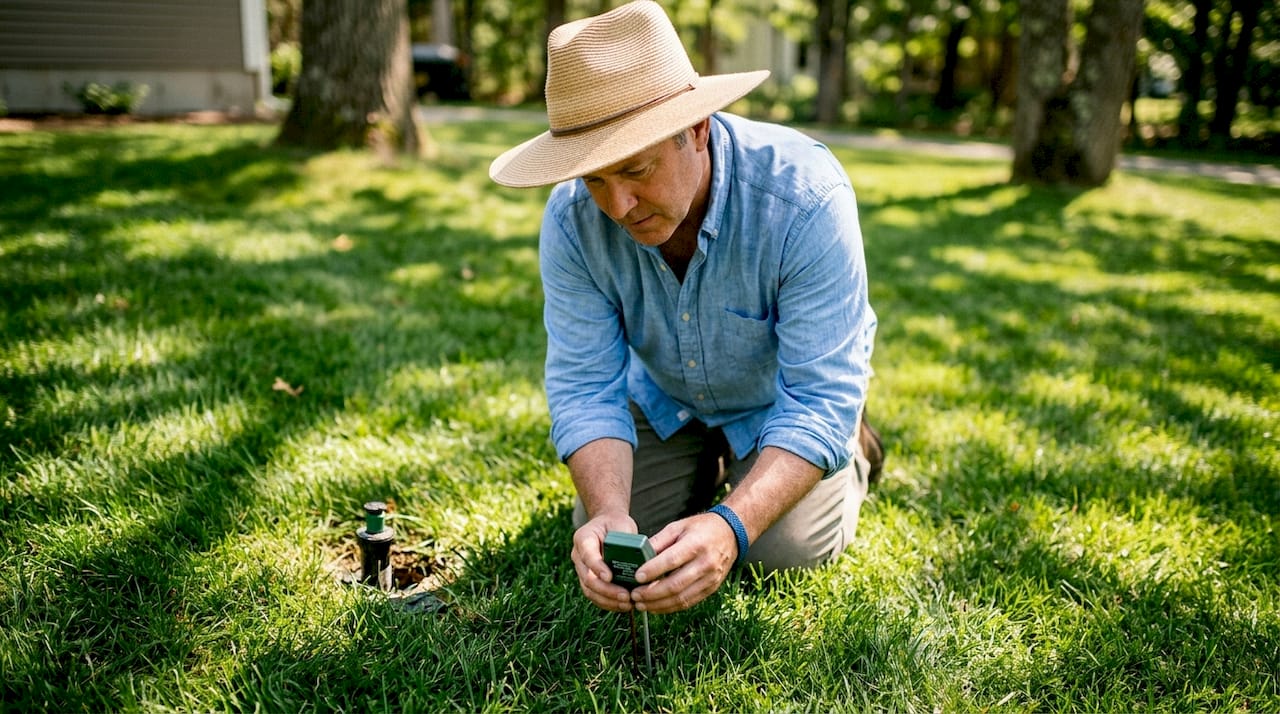
Maintaining a lawn in New Hampshire during summer means protecting cool-season grasses like Kentucky bluegrass and fine fescue from heat stress, drought, and fungal disease. These grasses thrive in spring and fall but slow down significantly once temperatures climb above 85°F. Summer lawn care in New Hampshire requires a specific approach built around the state’s granite-based soils, humid microclimates, and local water restrictions. Get the timing and techniques right, and your lawn stays green and dense through even the hottest weeks.
How to water your New Hampshire lawn effectively during summer
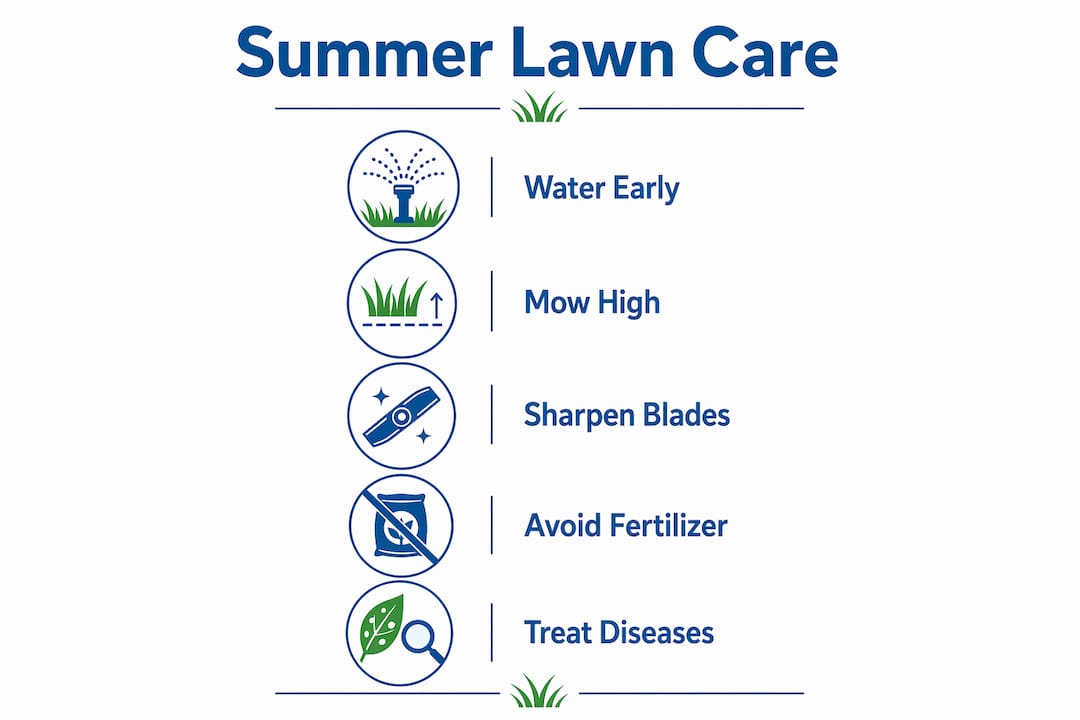
Watering is the single most important factor in summer lawn maintenance, and most homeowners get it wrong. Evening watering is a common mistake that leads directly to fungal diseases like Red Thread and Brown Patch. Grass blades stay wet overnight in New Hampshire’s humid river valleys and mountain regions, creating ideal conditions for disease. Water early in the morning, between 5:00 AM and 9:00 AM, so blades dry out before temperatures peak.
Overwatering poses a greater threat to NH lawns than drought stress. Established turf tolerates extended dry spells better than it handles waterlogged roots. Signs of overwatering include spongy turf, yellowing grass, and a persistent musty smell near the soil surface. Signs of drought stress include a blue-gray tint to the grass and footprints that remain visible for more than 30 seconds after you walk across the lawn.
New Hampshire’s granite-based soils drain quickly, which changes how you should irrigate. A single longer session of 35–40 minutes works better than the cycle-and-soak method used on clay soils. Water penetrates fast in granite-based ground, so shorter repeated cycles simply run off before reaching the root zone.
Key watering rules for NH summers:
- Water between 5:00 AM and 9:00 AM only
- Apply 1 inch of water per week, including rainfall
- Use a rain gauge to track actual moisture levels
- Check local restrictions: Salem, NH, for example, limits outdoor watering to odd-numbered days
- Skip watering if rain is forecast within 24 hours
Pro Tip: Set a mechanical timer on your hose bib or irrigation controller so early morning watering happens automatically, even when you forget. This one habit prevents most fungal disease problems before they start.
What mowing height and frequency work best in summer?
Mowing height directly affects how well your lawn handles summer heat. Raising your mowing height to around 3.5 inches keeps soil temperatures lower, retains moisture at the root zone, and improves drought resilience. Cutting grass too short in july or august exposes soil to direct sun, accelerates moisture loss, and weakens the turf’s ability to recover from stress.
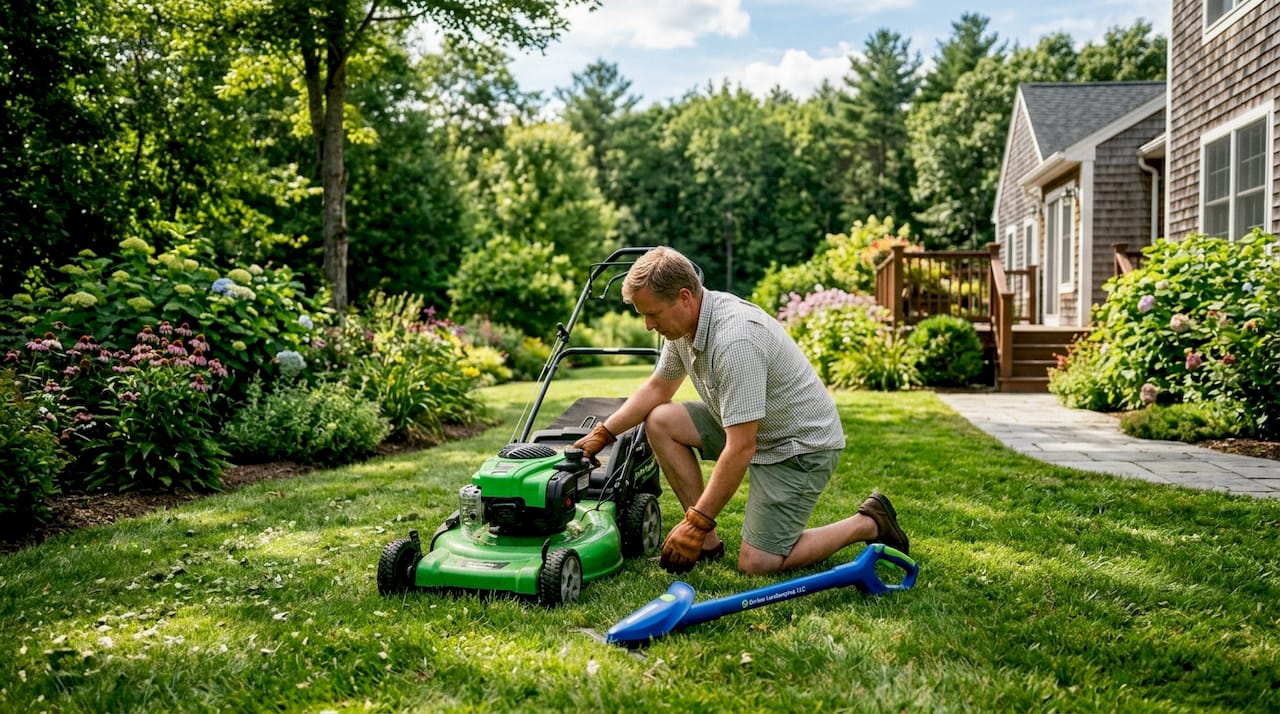
Mow every 7–10 days during summer, or whenever the grass grows one-third taller than your target height. The one-third rule is the standard in professional turf management: never remove more than one-third of the blade in a single cut. Cutting more than that shocks the plant and forces it to redirect energy from root development to leaf regrowth.
Mulching clippings back into the lawn is one of the most underused practices in New Hampshire. Mulching grass clippings replenishes organic matter in NH’s acidic, sandy soils and supports grass growth during heat stress. You get free fertilizer with every mow, and the clippings break down within days in warm summer conditions.
Common mowing mistakes to avoid:
- Mowing with dull blades, which tear grass instead of cutting it cleanly
- Mowing wet grass, which clumps clippings and smothers turf
- Mowing in the same direction every time, which compacts soil in ruts
- Mowing during the hottest part of the day, which stresses freshly cut grass
Pro Tip: Sharpen your mower blade at least once per season. A sharp blade makes a clean cut that heals quickly. A dull blade shreds the grass tip, leaving it brown and vulnerable to disease.
When and how to fertilize NH lawns during summer
Fertilizing cool-season grasses during peak summer heat does more harm than good. Avoid fertilizing during intense summer heat because it forces growth when the plant is already conserving energy. Pushing new growth in july or august weakens root systems and increases disease susceptibility. The right window for major fertilization is late august through october, when cool-season grasses actively grow again.
Soil pH management is a more urgent summer task than fertilizing. Rockingham County soils test as low as 3.31 pH, making them highly acidic with poor nutrient retention. Lime applications correct acidity and allow grass to absorb nutrients already present in the soil. A basic soil test kit from a garden center or the UNH Cooperative Extension gives you the data you need before applying any amendment.
Here is a practical summer soil care sequence for NH homeowners:
- Test your soil pH in june before heat peaks
- Apply lime if pH falls below 6.0, following label rates
- Hold all nitrogen fertilizer until late august
- Overseed thin areas in early september when soil is still warm
- Dethatch in fall, not summer, to avoid stressing heat-weakened turf
| Lawn condition | Summer action | Fall action |
|---|---|---|
| Healthy, dense turf | Mow high, water correctly | Light fertilizer in September |
| Thin or patchy areas | Water deeply, avoid foot traffic | Overseed and fertilize in September |
| Highly acidic soil (below 6.0) | Apply lime in June | Retest and adjust in October |
| Drought-stressed turf | Reduce mowing, water 1 inch/week | Aerate and overseed in September |
For areas with persistent thin spots, drought-tolerant grass varieties like tall fescue perform better under NH’s summer heat and acidic soil conditions. Tall fescue’s deep root system reaches moisture that shallow-rooted Kentucky bluegrass cannot access during dry stretches.
How do you identify and manage common summer lawn problems?
Red Thread and Brown Patch are the two fungal diseases most likely to appear in NH lawns during summer. Red Thread shows up as pink or red thread-like strands on grass blades, usually in patches 4–8 inches wide. Brown Patch creates circular brown areas that can expand quickly in humid conditions. Both diseases thrive when grass stays wet overnight, which is why early morning watering is the most effective prevention strategy.
Drought stress looks different from disease damage, and confusing the two leads to the wrong treatment. Drought-stressed grass turns a blue-gray color and loses its springiness. Diseased grass often shows distinct patterns, discoloration at the blade tips, or visible fungal growth. Before you water more or apply a fungicide, check whether the soil is actually dry by pushing a screwdriver 6 inches into the ground. If it slides in easily, the soil has enough moisture.
Bluets are native New Hampshire wildflowers that spread through lawns without overwhelming grass. They require minimal maintenance and support local pollinators, making them a practical choice for thin or shaded areas where traditional turf struggles. Rather than fighting every wildflower in your lawn, identifying which ones are ecologically beneficial saves time and supports biodiversity.
Grub damage appears in late summer as irregular brown patches that lift away from the soil like loose carpet. Scout for grubs in july and august by cutting a 1-square-foot section of turf and counting larvae. More than five grubs per square foot typically warrants treatment with a targeted biological control like milky spore or beneficial nematodes.
Pro Tip: Hand-pull invasive weeds like crabgrass before they set seed in august. One crabgrass plant can produce 150,000 seeds. Removing it before seed set eliminates next year’s problem without any herbicide.
What tools and schedule do you need for summer lawn care?
The right tools make summer lawn maintenance faster and more consistent. Every NH homeowner should have these five items ready before june:
- Mower with adjustable height deck: Set to 3.5 inches for summer
- Oscillating sprinkler or in-ground irrigation timer: Automates early morning watering
- Soil test kit: Tests pH before lime or fertilizer applications
- Moisture meter: Tells you actual soil moisture before you water
- Dethatching rake: Used in fall, but good to have ready for late-season prep
A simple summer schedule keeps care consistent without guesswork:
| Month | Priority tasks |
|---|---|
| June | Soil pH test, lime if needed, set irrigation timer |
| July | Mow weekly at 3.5 inches, water 1 inch/week, scout for grubs |
| August | Continue mowing and watering, hold fertilizer, plan fall overseeding |
| September | Fertilize, overseed thin areas, dethatch if needed |
Divinelandscapingllc works with NH homeowners to design irrigation systems that match local soil drainage and water restriction schedules. A properly designed system removes the guesswork from watering timing and volume entirely.
Key Takeaways
Effective summer lawn care in New Hampshire depends on correct watering timing, mowing height, and soil pH management rather than heavy fertilization or frequent treatments.
| Point | Details |
|---|---|
| Water early morning only | Watering between 5:00 AM and 9:00 AM prevents fungal diseases like Red Thread and Brown Patch. |
| Mow at 3.5 inches | Higher mowing height retains soil moisture and reduces heat stress on cool-season grasses. |
| Skip summer fertilizing | Fertilizing cool-season grasses in peak heat forces stress growth; wait until late august or september. |
| Test and lime acidic soil | NH soils, especially in Rockingham County, often fall below 6.0 pH and need lime before nutrients absorb. |
| Mulch your clippings | Returning clippings to the lawn replenishes organic matter in NH’s sandy, acidic soils for free. |
What I’ve learned from NH lawns that struggle every summer
After working with New Hampshire homeowners across Rockingham and Hillsborough counties, the pattern is clear: most summer lawn problems trace back to two mistakes. Homeowners either water too much at the wrong time, or they fertilize in july thinking they are helping. Both decisions stress the lawn rather than support it.
The drought years taught me something counterintuitive. Lawns that received less frequent but deeper watering came through dry stretches in better shape than lawns watered lightly every day. Shallow watering trains roots to stay near the surface, where soil dries out fastest. Deep, infrequent watering pushes roots down to where moisture persists.
I also stopped fighting every wildflower I saw in client lawns. Bluets, in particular, are worth keeping. They fill in thin spots, require no care, and feed pollinators that benefit the whole yard. The homeowners who embrace a slightly naturalistic lawn spend less time and money maintaining it, and their properties look just as good from the street.
The biggest mistake I see is homeowners waiting until the lawn looks bad before acting. By the time Brown Patch is visible or drought stress turns the grass gray, recovery takes weeks. A consistent schedule from june through september, focused on watering and mowing height, prevents most problems before they appear. Consult a local NH landscaping professional if you are unsure where to start. Getting the basics right in year one pays off every summer after that.
— Damian
Professional lawn and landscape services for New Hampshire homeowners
Your lawn is the foundation of your entire outdoor space. Divinelandscapingllc provides landscape design and care services built specifically for New Hampshire’s soil conditions, climate zones, and local water restrictions.

From irrigation planning to full landscape design for residential properties across southern NH, the team at Divinelandscapingllc brings regional expertise to every project. Whether you need a properly graded drainage solution, a low-maintenance planting plan, or a complete outdoor living area, the work is designed to hold up through New Hampshire summers and beyond. Contact Divinelandscapingllc at divinelandscapingllc.com to schedule a consultation and get a plan built for your property.
FAQ
When should I water my lawn in New Hampshire during summer?
Water between 5:00 AM and 9:00 AM to prevent fungal diseases. Grass blades dry out before temperatures peak, reducing the risk of Red Thread and Brown Patch.
What grass types grow best in New Hampshire summers?
Kentucky bluegrass and fine fescue are the most common NH lawn grasses, but tall fescue handles summer heat and acidic soils better due to its deeper root system.
Should I fertilize my lawn in July or August in New Hampshire?
Avoid fertilizing cool-season grasses during peak summer heat. Wait until late august or september when temperatures drop and grass actively grows again.
How do I know if my lawn has a fungal disease or drought stress?
Drought-stressed grass turns blue-gray and stays flat when walked on. Fungal diseases like Red Thread show distinct pink threads or circular brown patches with visible growth patterns.
What is the best mowing height for a New Hampshire lawn in summer?
Mow at 3.5 inches during summer months. This height keeps soil temperatures lower, retains moisture, and reduces the need for frequent watering.